
Search Blount County Divorce Decree
Blount County divorce decree records are split between the county court system, the Clerk & Master office, and older record holdings that may sit with Records Management. Most people start with the online court records portal because it can show recent divorce case details from August 1, 2019 forward. If you need a fuller file, a certified copy, or an older decree, Maryville offices can guide you to the right place. That makes Blount County a good county for both quick lookups and deeper case research when you know the spouse names or a rough filing date. A Blount County divorce decree search starts with Blount County because the local portal covers recent cases and the county offices handle the rest. In Blount County, the divorce record trail stays easier when you keep the county name in the request.
Blount County Divorce Decree Facts
Blount County Divorce Decree Search
The online court records portal is the fastest place to start. It supports searches by case number, party name, and filing date range. You also have to choose the right court, since Blount County divorce matters may sit in Chancery Court, and older files can be routed to another office if the first search comes up short. That makes a Blount County divorce record easier to sort by court and date. For Blount County divorce decree work, the court choice matters as much as the name search.
That is useful when you have only part of the record details. A last name, a filing year, or the name of one spouse may be enough to narrow the search. The county also offers free basic case information through public access tools, so a search can tell you whether the case is active, closed, or still moving through the system.
For local help, the Blount County Clerk & Master office page at www.blounttn.gov/308/Clerk-Masters-Office is the best county starting point. The county portal at www.blounttn.gov can also route you toward the correct office. If you need a statewide trail map for older records, TSLA's divorce record guide explains how county files and archived records fit together in Tennessee.
To keep a search moving, it helps to bring a small set of facts. Use the spouse names as they appear in the case, then add the estimated filing period and any case number you already have. The more precise the start point, the faster the court staff can tell whether the decree is in the online system or in the paper file stack.
- Full names of both spouses.
- Approximate filing date or year.
- Case number, if known.
- Choice of Chancery or Circuit Court, if known.
Note: Blount County records staff can help you find the right office, but they still need enough detail to separate one divorce decree from another in the same county.
Blount County Divorce Decree Copies
Once you find the right case, the next step is usually a copy request. Blount County charges per page for standard copies, and certified copies cost more because they carry the court seal and extra handling. If you only need to inspect the record, Tennessee public records law lets you review public records during business hours without paying for the inspection itself. Copy fees still apply when you ask for paper or certified output. If you need a Blount County divorce decree copy, ask for the county court file, not just the certificate. The county divorce record and the state certificate are different records, even in the same case.
The county also uses a short response window. Under Tennessee public records law, a records custodian should respond within seven business days. That does not always mean the copy is ready in seven days, but it does mean the county must answer the request quickly. If the file is older, staff may need more time to pull it from Records Management or a storage room.
The office page for the Clerk & Master at www.blounttn.gov/308/Clerk-Masters-Office is the right place for local process details. The Records page at www.blounttn.gov/277/Other-Records is also useful when a divorce decree sits with older county holdings instead of the live court file. That mix matters in Blount County because the court file, the clerk copy, and the older storage record may not all match one another in the same way.
Mail requests work best when you include the spouse names, the rough date, a return address, and a stamped envelope. In-person requests are faster when you want staff to verify the file while you wait. Either way, you are asking for a county decree, not a statewide certificate, so the right office and the right case details matter.
Blount County Divorce Decree Records
Blount County divorce decree records are more detailed than a simple state certificate. A decree can show the final order, property terms, custody language, and any other court direction that ended the marriage. The online portal often shows basic docket data only, so you may need the full case file if you want the terms of the judgment or the papers filed along the way. Blount County divorce records can also include financial terms and filing papers, which is why the county file matters. In Blount County, the decree is the county record that carries the legal detail.
That distinction matters when a person needs proof for a title change, a property issue, or a court follow-up. The state Office of Vital Records can confirm that a divorce exists, but the county court file is where the decree lives. If the divorce happened long ago, the county may also point you to historical records or archival holdings instead of the current clerk window.
The county portal at www.blounttn.gov and the county records page at www.blounttn.gov/277/Other-Records are both useful when you need to sort out which office holds the file. For recent cases, the online court search can confirm case status quickly. For older cases, the search may only be the first step.
Blount County courts also use electronic filing systems for many cases, which helps newer divorce pleadings move faster than old paper files did. That does not replace the need to ask for the decree itself, but it does make the path to the file cleaner when you know the case number and the right court division. For a Blount County divorce decree search, the online trail and the county office trail work best together.
Lead-in note: the county portal at www.blounttn.gov can help you decide whether the record is in the active court system or in an older county records set.
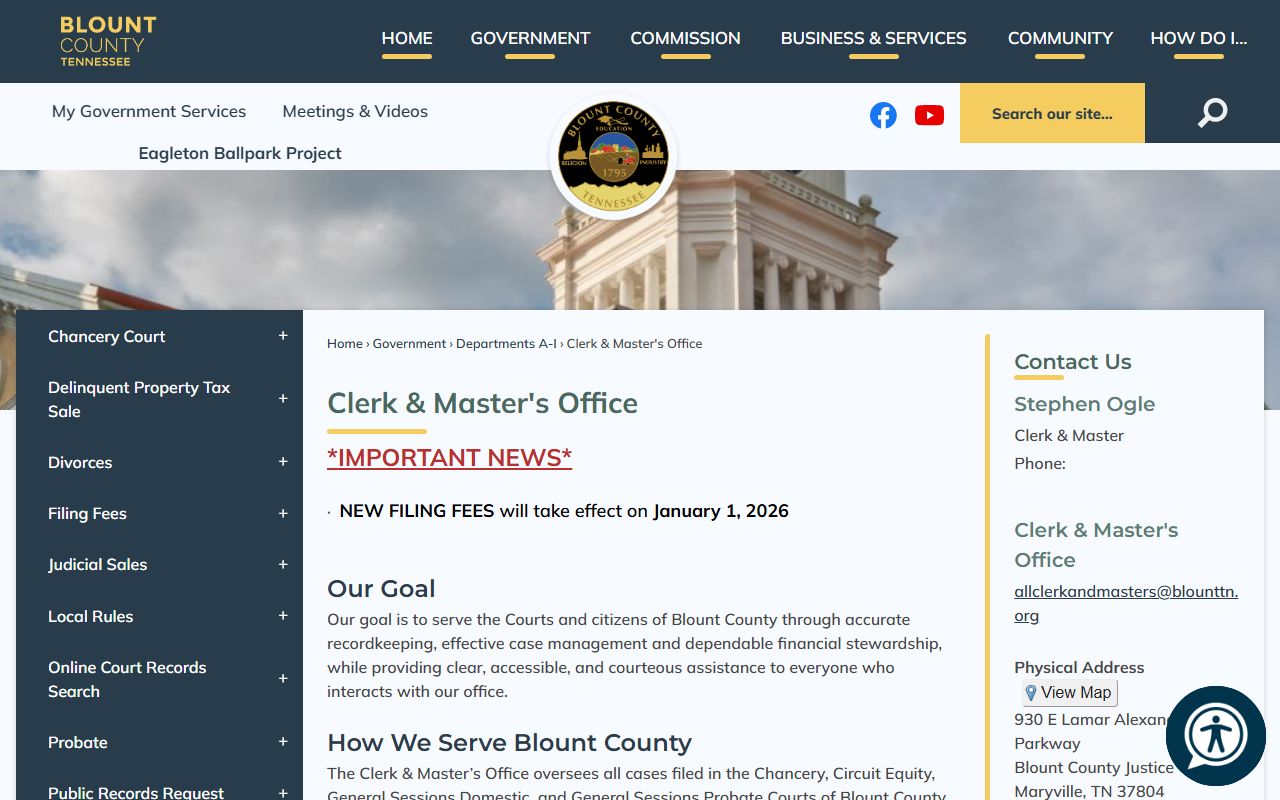
The Clerk & Master office is the main local contact when you want a county decree, a certified copy, or direction to the proper records room.
Blount County Divorce Decree and Tennessee Law
Tennessee divorce law still frames the county process. The state residence rule in T.C.A. § 36-4-104 tells you when a Tennessee court has jurisdiction. The grounds section in T.C.A. § 36-4-101 explains the fault and no-fault paths. Those rules control what gets filed before a Blount County decree is entered.
The waiting period also matters. Under the Tennessee divorce process, an agreed case with no minor children has one timeline, and a case with minor children has another. That timing affects when the judge can sign the decree, which in turn affects when a county file becomes final and when a person can ask for a certified copy for later use.
For property, the county follows the state equitable distribution rule in T.C.A. § 36-4-121. That is why a Blount County divorce decree may include property terms, support details, and child-related orders in one judgment. The decree is not just a closure sheet. It is the order that shows how the marriage ended and what the court required next.
If you need forms, the Tennessee Supreme Court approved divorce forms at tncourts.gov/help-center/court-approved-divorce-forms are the right statewide source. They are useful when a Blount County filer wants to avoid guessing about headings, certificates of service, or parenting plan paperwork.
Blount County Historical Divorce Decree Records
Older Blount County divorce decree records may not stay in the same office forever. When they age past the active records window, they can move into older county files or archive-style storage. That is why a search can start in the live court system and then shift to Records Management or TSLA if the decree predates the recent online range. For older Blount County divorce decree records, TSLA is the cleanest historical backup. The county name still matters in archive work because it tells the clerk and the archive which file run to check first.
The Tennessee State Library and Archives is the best backup for older material. It holds historical county court records and indexed divorce material once the confidentiality period ends. That matters if you are tracing an old Blount County divorce from decades ago and the clerk can only confirm that the record no longer sits in the active file room.
Historical research often starts with a spouse name and an estimated decade. If that still leaves too much room, TSLA guidance can help narrow the search through county court books and older public indexes. The archives page at sos.tn.gov/tsla is a good place to begin when the county office says the record is older than the active set.
Lead-in note: the county records page at www.blounttn.gov/277/Other-Records can help you see how older holdings are organized before you make a request.

The county portal is useful when you want the general office directory first and the court record next.
Lead-in note: the county records page at www.blounttn.gov/277/Other-Records is the best cue for older holdings and record categories.
That page is helpful when the divorce decree is no longer in the first office you checked and you need a cleaner path to the older file.
Blount County Divorce Decree Help
If you are filing on your own, the county record search is only one piece. The Tennessee Court system gives forms, basic instructions, and self-help material that can keep a Blount County filing on track. That helps when the problem is not the record search itself, but getting the case into the court in a way that will lead to a clean final decree later. Blount County divorce record requests go best when you start local and only switch to state tools if the county points you there.
The Tennessee Bar Association at www.tba.org can help with broader family law guidance. The state vital records page at www.tn.gov/health/health-program-areas/vital-records.html is the right place for divorce certificates, while the county office is the right place for the actual decree. Those are related, but they are not the same record.
When you want a simple path, start with the county court, then move to the state certificate only if that is all you need. The county court file gives the legal detail. The state certificate confirms the event. In Blount County, knowing that difference saves time and avoids a request being sent to the wrong office.
Note: If the case is recent, the county office can often confirm the file faster than the archives can, so it is smart to start local before you switch to state history tools.