
Find Knox County Divorce Decree
Knox County gives you one of the stronger divorce decree search paths in Tennessee. The county has an online criminal court records portal, public records guidance, and well-developed clerk and archive resources in Knoxville. That means a person looking for a Knox County divorce decree can often check an online lead first, then move to the Chancery Court, Circuit Court, or archives if the decree itself is not on screen. This page keeps those local options separated so you can choose the right path for a recent case, an older case, or a certified copy request.
Knox County Divorce Decree Facts
Knox County Divorce Decree Search
Knox County research gives you several real starting points. The Criminal Court online records portal is available from November 2017 forward and can be used to check case activity and document images after registration. For divorce decree work, the Chancery Court and Circuit Court are still the main local offices, but the portal can save time by showing whether a file is active, archived, or ready for a request. That is helpful in a county with a large record load and multiple court divisions.
Use the official links at Knox County Criminal Court online records and Knox County public records information when you want the county's own guidance. The official county clerk and circuit court pages at Knox County Clerk and Knox County Circuit Court Clerk add more local context. For historical material, the State Library and Archives remains the backup source.
Knox County is also one of the few places where the online portal can narrow the request before you ever visit the clerk. The portal starts in November 2017, which is helpful for recent cases, and the county public-record notes explain how to use the portal, the courts, and the archives together. That matters because Knox County divorce files can be broad. A single case may include financial affidavits, parenting plans, and a final decree, but not every part will be visible in the same place. If the record is older, the archives and the divorce index become the better clue. If the record is current, the portal can tell you whether the next step should be Chancery, Circuit, or a certificate request. That makes the county faster to work with when you already know a party name or a case number.
The first image points to the online records path at Knox County Criminal Court records.
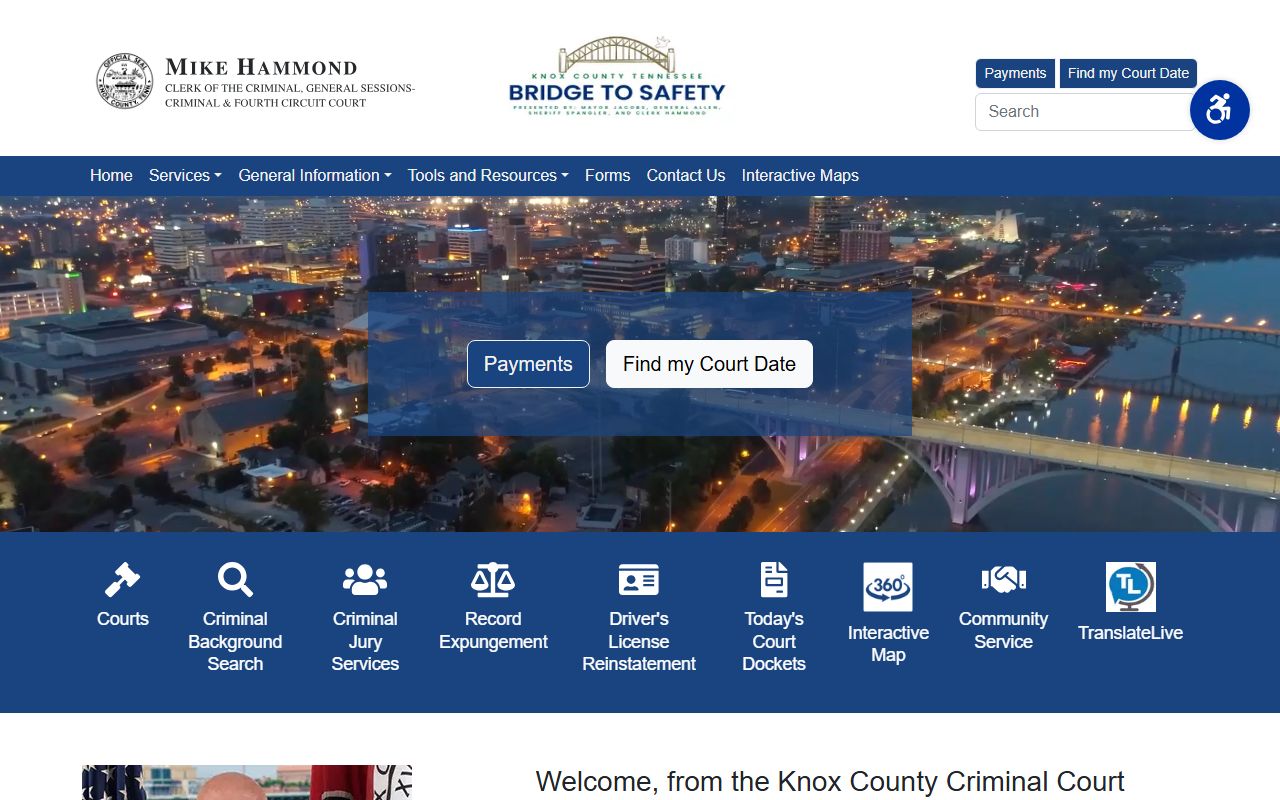
That portal is the best place to check whether a Knox County divorce decree has a recent online trail.
The second image points to the county public-records guidance at Knox County public records.
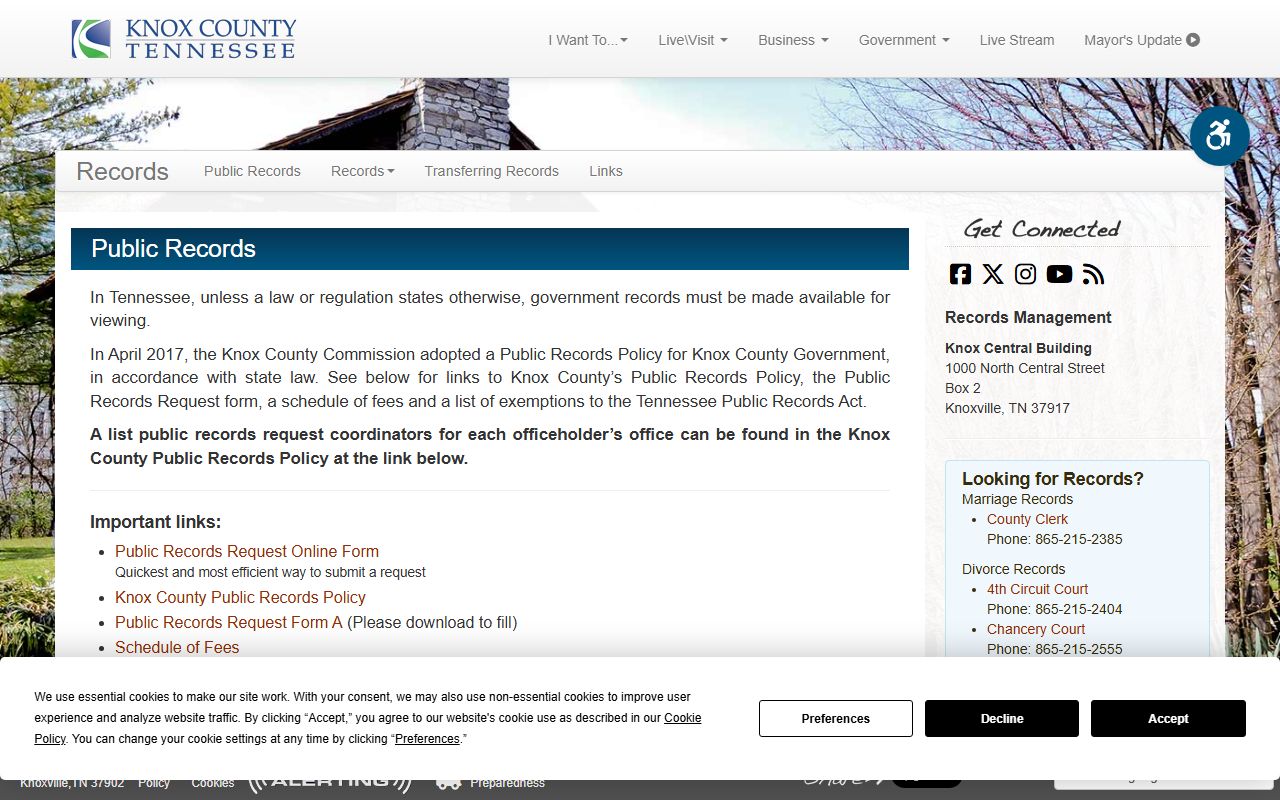
That page helps when you need the county's own rules for a copy request or records inspection.
Knox County Divorce Decree Copies
For a Knox County divorce decree copy, the Chancery Court and Circuit Court are the offices most likely to provide the full court file. The research notes that Chancery and Circuit copies run $0.50 per page, with $5 certified copies, and that the archives have separate copy rates. That gives Knox County a more layered search path than many counties. You can start online, then move to the court office, then use the archives if the case is old enough or if you need a different copy format.
The Chancery Court is in the City-County Building at 400 Main Street, Suite 125, and the Circuit Court is in Suite M30. The Knox County Archives are at the East Tennessee History Center, 601 S. Gay Street. The archives are useful for divorce indexes and historical court material, especially when the file predates the online portal. If you only need a state certificate instead of the full decree, Tennessee Vital Records is the correct backup. That keeps the request focused on the exact document type.
Knox County Clerk and Knox County Circuit Court Clerk are the most useful local references when you need the county's own divorce access notes.
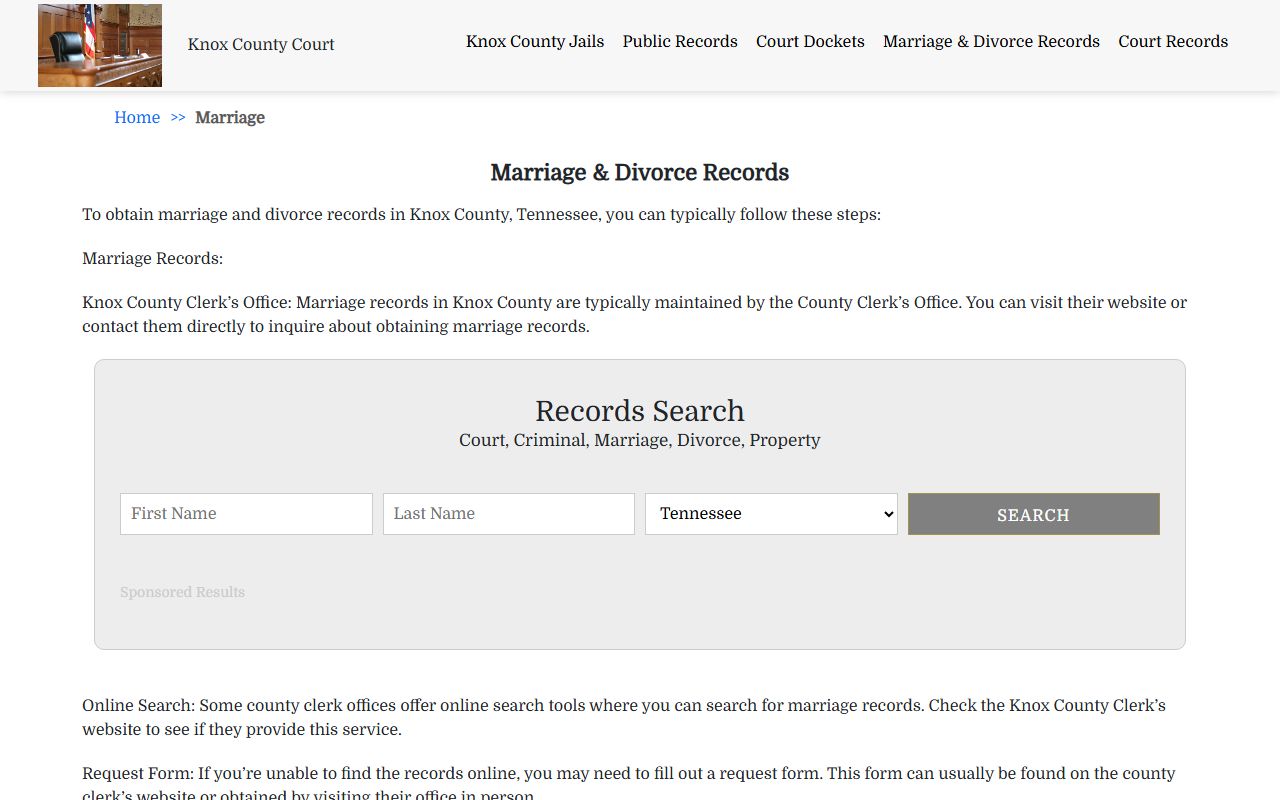
That image fits the county research side and helps when the online portal is only part of the answer.
Knox County Divorce Decree Records
Knox County records are broad. The divorce decree can sit alongside financial affidavits, property settlement papers, parenting plans, and final orders. The public records guidance and the archives matter because they help you move between a current case, a scanned portal image, and an older paper file. That flexibility is one reason Knox County is a strong county for divorce decree work. You can often find the lead online and then use the right office for the actual copy.
When a divorce file is older or the portal does not show the full document, the archive path becomes important. The research notes that Knox County Archives hold marriage records from 1901 forward and a divorce index. That is useful for family-history searches and for cases where you only know a spouse name. It also helps when a decree was recorded before current online systems existed.
TSLA's divorce records FAQ is useful when a Knox County record has aged into archive territory.
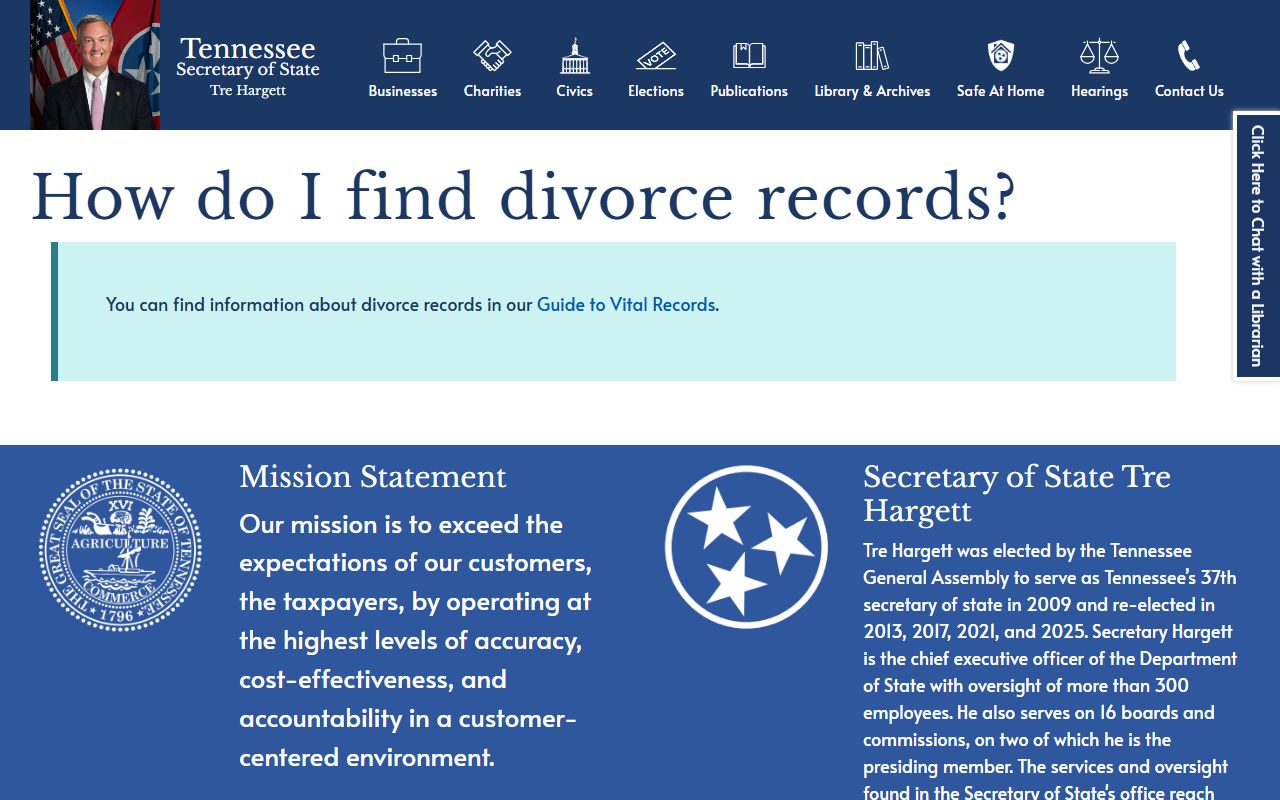
That state image gives the historical backup path that matches the Knox County archive use case.
Knox County Records Help
Knox County gives you enough official structure that the first request can be precise. If you want the full decree, ask the Chancery or Circuit Court clerk. If you want to inspect a public record or verify the case exists, start with the portal. If you want older research, use archives. If you only need a legal proof of divorce, state Vital Records may be enough. That is the key distinction in Knox County and it prevents a lot of back-and-forth.
The county record system is one of the most developed in the state, but the request still depends on the exact record type. The county's own public-record notes, court pages, and archives page all help narrow the path. That is why this county deserves a page that leans on the local portal, the archive office, and the court clerks together.
Note: Knox County is strongest when you use the portal first and the clerk or archives second.