
Search Moore County Divorce Decree
Moore County Divorce Decree records are usually traced through the Circuit Court Clerk in Lynchburg, with the Clerk & Master and CTAS directory information helping fill in the local picture. That makes Moore County a smaller but still workable search area. If you already know the party names or the approximate divorce year, the county office can often point you to the right record path quickly. When the court file is not enough, state resources and county directory references help you confirm where the record belongs and whether you need a decree or only a certificate.
Moore County Divorce Decree Facts
Moore County Divorce Decree Search
The Moore County Circuit Court Clerk is the main contact for a Moore County Divorce Decree request. Research lists the clerk's mailing address as P.O. Box 8185 in Lynchburg and the phone number as (931) 759-7208. The Clerk & Master also appears in the research, with a Lynchburg location and a tncourts.gov email address. That makes Moore County a county where the court structure is clear even if the public online footprint is small.
Because the local site is limited, the CTAS directory becomes an important reference. The county research points to the Moore County CTAS page and the directory listing at CTAS Moore County directory. Those sources do not replace the court file, but they help you confirm office names, roles, and the county setup before you make a request. For a Moore County Divorce Decree search, that saves time and keeps the request focused.
The first image points to the county directory at CTAS Moore County, which is the most useful approved local reference for this county.
That image works well because Moore County's best approved online reference is a county directory rather than a large public portal.
The county clerk also handles marriage licenses, and the Register of Deeds is another useful local contact for records context. Those offices do not issue the divorce decree itself, but they can help you verify dates, names, and local record history when a Moore County Divorce Decree search starts from family papers rather than from a case number.
Get a Moore County Divorce Decree Copy
To get a Moore County Divorce Decree copy, start with the Circuit Court Clerk and provide the names of the parties, the date of divorce if known, and a valid ID. Research says the clerk maintains the divorce records, and the County Clerk handles marriage licenses. That means the court office is the source for the judgment itself, while the county clerk can help with the surrounding record trail. If the case is recent, the courthouse request may be enough on its own.
The state route is simpler when you only need proof that the divorce occurred. Tennessee Vital Records issues certified divorce certificates for $15, but that is not the same as a full county decree. A Moore County Divorce Decree request is best handled through the courthouse when you need the terms, the final order, or the related filing papers. If the case is older, the county office may send you toward state or archival support.
The second image points to the state copy path at Tennessee Vital Records, which is the right fallback when a Moore County Divorce Decree search only needs a certified certificate.
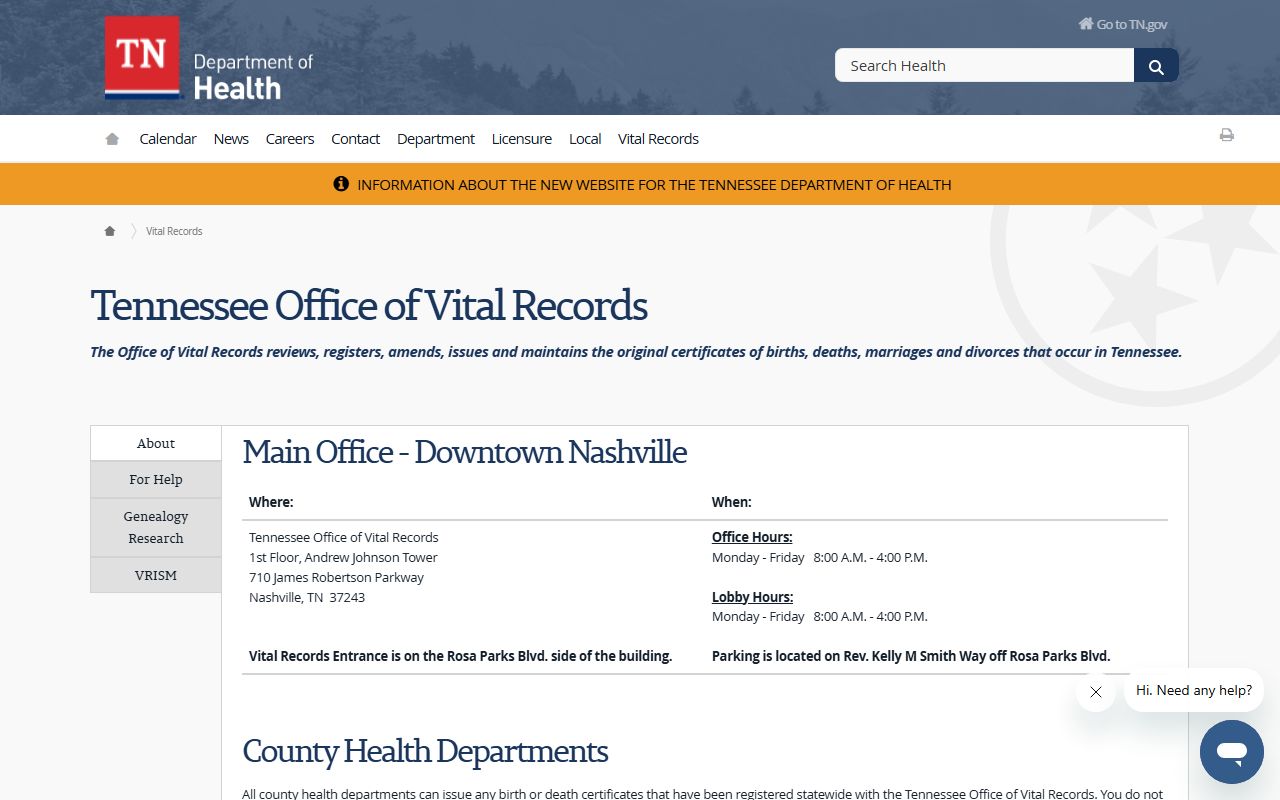
That keeps the county decree separate from the state certificate route.
If you need an official state backup for old divorce files, TSLA is the better historical tool. The state library and archives also helps when the county clerk has limited online access or when the file falls into the older record window. For Moore County, the best workflow is still simple: court office first, state office second, archive support third.
Moore County Divorce Decree Archives
Moore County is small enough that old record questions can be easier to solve with directory references than with broad searches. The county was established in 1871, with Lynchburg as the county seat, and the CTAS listing is the strongest approved reference for office structure. That matters when a Moore County Divorce Decree search starts with just a surname or an approximate year. The local layout is not complicated, but you still want the right office before you order copies.
State history tools can help with older divorce records. Tennessee Vital Records is useful for the certificate path, and TSLA gives you the historical backup when a file is too old for routine access. The state library and archives is especially useful if you are tracing a Moore County Divorce Decree that belongs to an older family line or a case that no longer fits a current courthouse search. In a county this size, those backups matter more than flashy online tools.
The Tennessee State Library and Archives is the best official historical backup when a Moore County Divorce Decree search reaches beyond the local clerk window.

That archive image gives the county a dependable fallback for older case work and family history searches.
The county research does not show a large public court portal, so historical access is mostly a matter of calling the clerk, checking the directory, and using state support when needed. That is normal for a smaller Tennessee county and does not make the search difficult. It just means the best route is more direct than digital.
Moore County Divorce Decree Records
A Moore County Divorce Decree file usually lives with the Circuit Court Clerk and includes the final order plus the related case papers. That is the file you want when you need the exact terms of the court decision. A certificate from the state office only proves the event happened. It does not show the details. That difference matters if you are checking property language, a prior name, or another part of the judgment.
Moore County also has a Clerk & Master in chancery court, and the research notes that the county handles divorce records through the court system rather than through a separate online repository. That means a Moore County Divorce Decree search works best when you start with the clerk office and use county directory references to confirm the office that held the case. If the record is older, the state archive path can fill the gap.
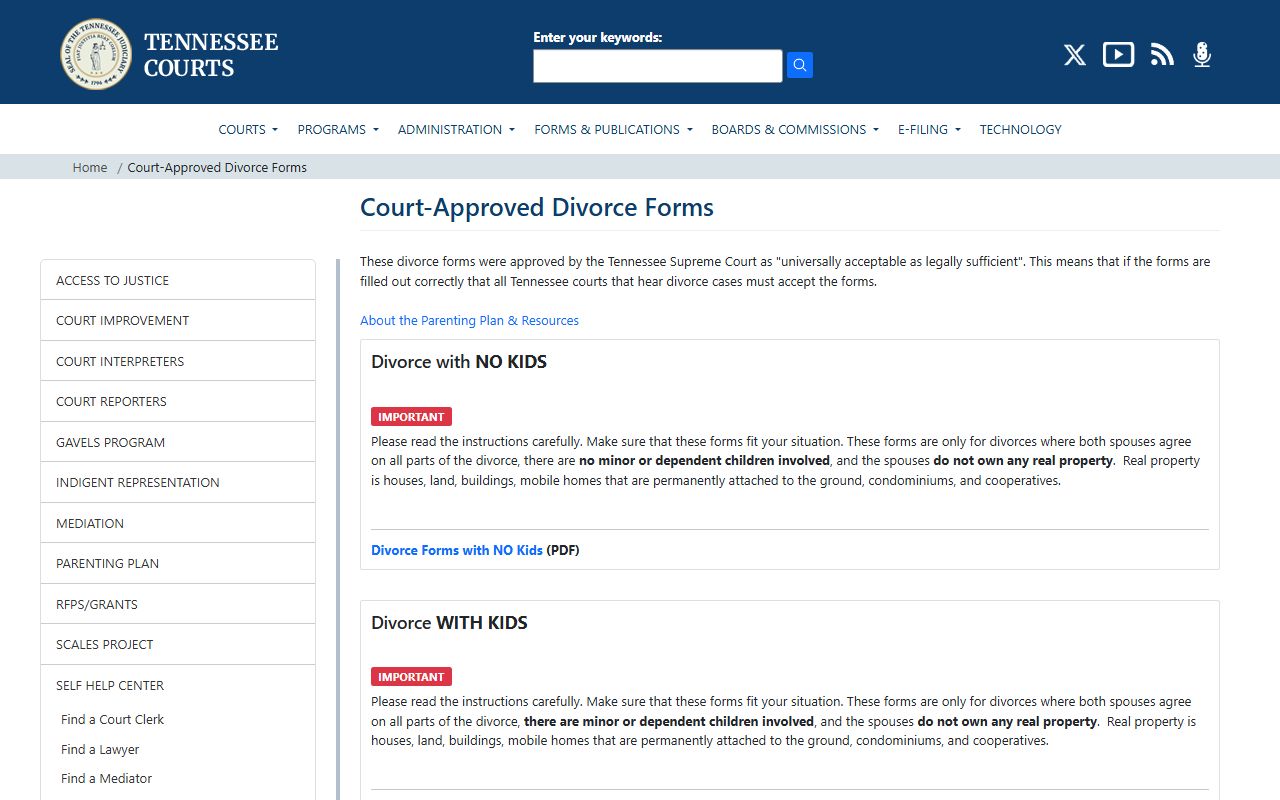
Tennessee court-approved divorce forms are useful when you are still at the filing stage and want to understand the path that eventually becomes the Moore County Divorce Decree file.
That forms image links the current county search back to the statewide filing framework.
The county clerk's marriage license work and the Register of Deeds help round out the local record picture. Those offices are not the decree source, but they help you confirm dates and relationships when the divorce file is part of a broader family records search. When all you need is the case order, keep the request simple and go to the court office first.
Moore County Divorce Decree Help
Moore County is one of the easiest counties to explain because the record structure is compact. The Circuit Court Clerk handles the divorce file. The Clerk & Master handles chancery matters. CTAS provides office references. Vital Records gives you the certificate backup. TSLA gives you the historical backstop. If you keep those four lanes separate, a Moore County Divorce Decree search stays efficient and accurate.
When you are unsure where to begin, the safest first step is still the courthouse. If you need legal guidance rather than a file, the Tennessee Bar Association is the best approved support source. That is especially true when the decree search touches a pending issue, a name change, or another legal question beyond simple copy retrieval. County records and legal help should stay separate so the request stays clean.
The Tennessee Bar Association is the best high-authority support link when a Moore County Divorce Decree question moves beyond simple records access.

That support image is a good fit because it points to official legal help instead of low-quality record vendors.